Dual-fuel systems
Run on gasoline or propane. They may be recommended when flexibility and lower upfront cost matter.

Storm-Ready Systems
Each recommendation depends on your home, panel, fuel access and appliance priorities.
Run on gasoline or propane. They may be recommended when flexibility and lower upfront cost matter.
Run on gasoline, propane or natural gas. They may be recommended when natural gas access is available.
A safe exterior connection point for generator power. It matters because it keeps cords out of doors and windows.
These help prevent unsafe backfeed. The right option depends on your electrical panel.
Outdoor-rated cords connect the generator to the inlet. Cord size and length must match the system.
Generators must operate outside and away from openings. Placement matters for safety and daily use.
Home and beyond
Some homeowners also want flexible backup power for an RV, workshop or small business need. A load assessment helps decide what is realistic before equipment is selected.
Ask About My Setup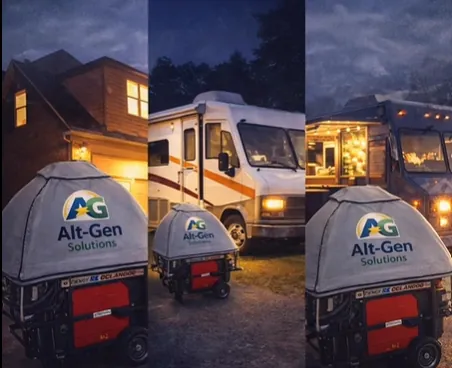
A generator running cover helps protect the unit while it stays outdoors in severe weather.
Fuel choice affects runtime, storage and convenience. We help compare realistic options.
A load assessment helps decide what your generator should power and what should stay off.
Installation steps depend on your panel, home layout and approved connection equipment.